
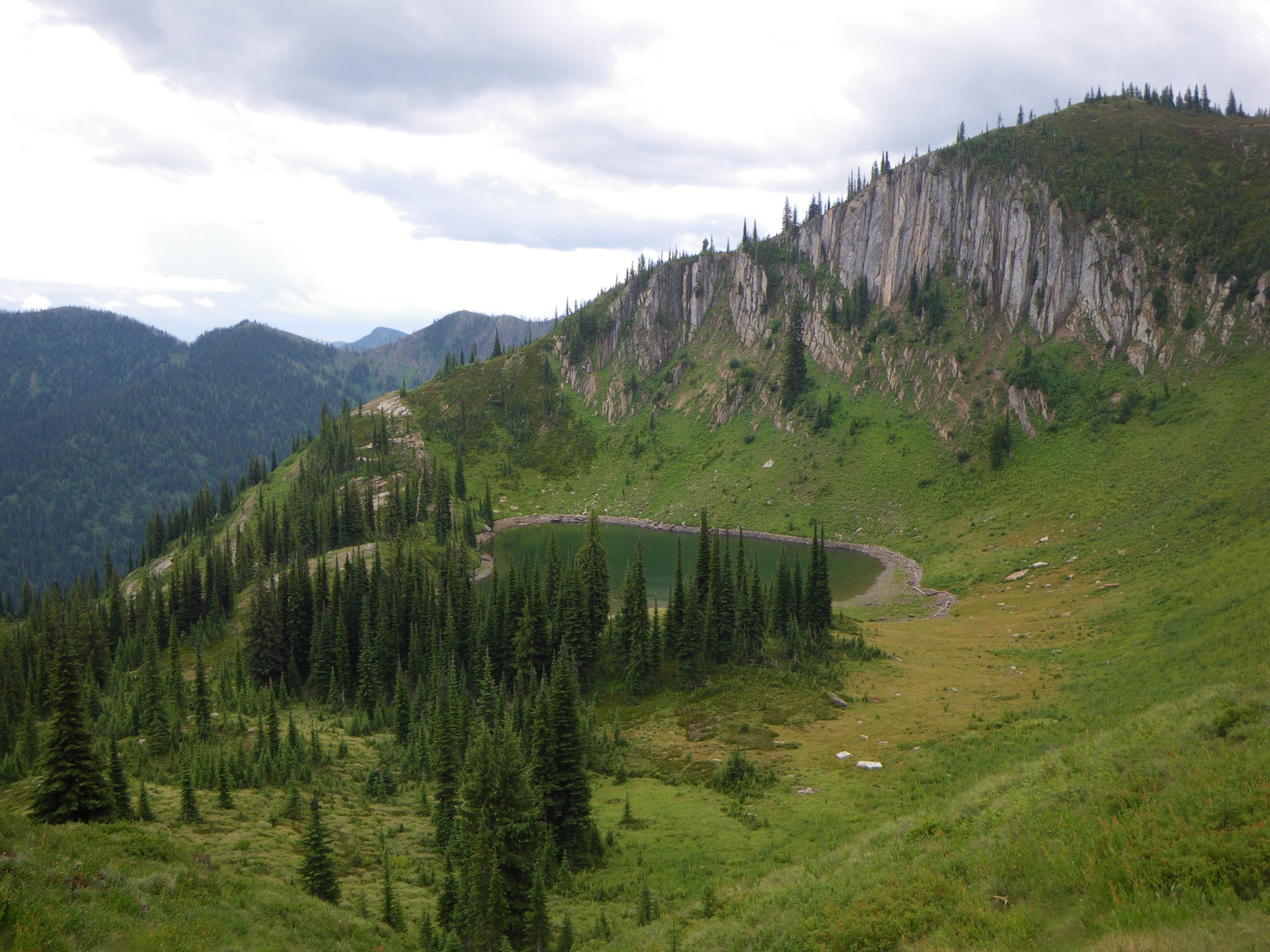
October 20, 2026 — Advocates for the West and our conservation partners sued the U.S. Forest Service for its approval of the Revised Land Management Plan for the Nez Perce-Clearwater National Forests, the overarching document that guides management of approximately 4 million acres of National Forest land in North Central Idaho. Plaintiffs Idaho Conservation League, Great Burn Conservation Alliance, and Montana Wildlife Federation, represented by Silvix Resources and Advocates for the West, argue that the agency failed to provide adequate protections to safeguard wolverines, mountain goats, and the Great Burn ecosystem.
Adopted in early 2025, the plan replaces two separate management plans for the Clearwater and Nez Perce National Forests created in the 1980s, well before the two Forests were consolidated. The conservation groups’ central claim concerns changes to the boundaries of the Great Burn Recommended Wilderness Area (RWA). The agency shrank the Great Burn RWA by approximately 3,700 acres overall and removed two large blocks on the north and south ends of the RWA that are critical to wildlife, while adding new acreage on the west side. These changes set the stage to open once-closed areas to winter motorized use.
The high-elevation areas removed on the north and south ends of the Great Burn are valuable habitat for wolverines and mountain goats, species that are highly sensitive to human disturbance during critical winter months. Rather than use the best available scientific information to conserve mountain goats and wolverines and protect the Great Burn from known and escalating threats such as climate change and motorized winter recreation, the Forest Service shirked its procedural legal obligations, the conservation organizations allege, and through these boundary manipulations reduced conservation outcomes for mountain goats, wolverines, and the Great Burn.
For over a decade, the Forest Service failed to enforce restrictions on over-snow vehicle access to the Great Burn, allowing snowmobile users to flout the closure despite impacts to wildlife. The Forest Service chose to shift protected-area boundaries to accommodate this illegal motorized recreation rather than fulfill the agency’s obligations to conserve wildlife. The Great Burn RWA extends into Montana and onto the Lolo National Forest, and the conservation organizations note in their suit that wildlife does not recognize state or Forest boundaries.
The Great Burn RWA straddles approximately 50 miles along the Idaho and Montana state line in the Northern Bitterroot Mountains. It offers crucial habitat connectivity for wildlife, linking landscapes and species within the Forest and providing important wildlife passage between Central Idaho’s wildlands and the Greater Yellowstone Ecosystem on one side, and on the other the Crown of the Continent Ecosystem, a 10-million-acre region in the Northern Rocky Mountains where Montana, Alberta, and British Columbia meet, and the Selkirk-Cabinet-Yaak Ecosystems. The Great Burn ecosystem contains specialized habitat for a range of species including mountain goats and wolverines, serves as an important corridor for wildlife migration along the Bitterroot Divide, and offers outstanding opportunities for quiet recreation in a wild, undeveloped landscape.
The Lolo National Forest is currently revising its own Forest Plan. Changes to the boundaries of the Great Burn on the Idaho side could influence decisions about the boundaries of the Montana side of the Great Burn RWA.