
‘Winning for the West’
January 2026
- NEXT Refinery (OR): The U.S. Army Corps of Engineers determined that NEXT Renewable Fuels’ current proposal to construct a diesel refinery at Port Westward requires another major federal permit. Advocates for the West and our partners sued the Army Corps for failing to require this permit, which would protect levee infrastructure from NEXT’s refinery construction. Construction for NEXT’s proposed refinery and rail yard would involve driving heavy equipment along a levee that protects the Port Westward area from the Columbia River. Locals and farmers have long raised concerns about the proposed refinery’s impacts on the system of levees and dikes that prevent flooding and provide irrigation. Degradation of the levee would put farmland, homes, and energy infrastructure at risk of flooding. Under the Rivers and Harbors Act, the Army Corps must protect levees from damage by reviewing and issuing permits for activities that use, occupy, or alter levee infrastructure.
February 2026
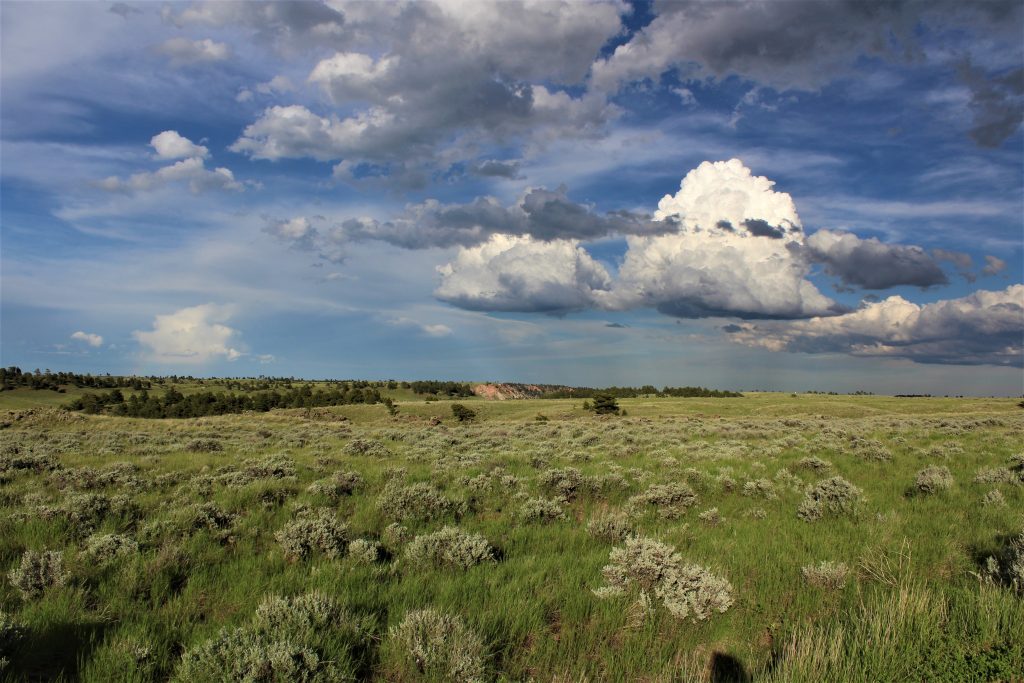
- Converse County Oil & Gas Project (WY): A federal district court ruled that the Bureau of Land Management (BLM) did not follow the law when it approved the massive, 5,000-well Converse County Oil & Gas Project in Wyoming’s Powder River Basin, finding that the agency failed to properly study reasonable alternatives that might reduce environmental harm—such as slowing the pace of drilling or requiring stronger measures to limit greenhouse gas emissions. The Court granted Advocates for the West’s motion for summary judgment as well as our request to vacate key approval documents, sending them back to the agency for a more thorough environmental review and halting the approval of any new drilling permits that rely on those documents. The decision requires BLM to revisit the project with a fuller examination of how development could affect air quality, climate, wildlife, and other natural resources—and whether less harmful options are available.
March 2026
- Northern Corridor Highway Through Red Cliffs National Conservation Area (UT): The U.S. District Court granted a motion by conservation organizations to block ground-disturbing activities associated with construction of the Northern Corridor Highway through the Red Cliffs National Conservation Area near St. George, Utah. The Court’s injunction prohibits the Utah Department of Transportation (UDOT) from starting construction-related activities that would cause irreparable harm to the threatened Mojave desert tortoise. UDOT insisted on moving forward with these activities as quickly as possible despite uncertainty about its final highway plans and conservation organizations’ pending lawsuit that seeks to again declare the highway illegal. In granting the injunction, the judge found that conservation organizations’ lawsuit is likely to succeed in showing the highway approval is unlawful. Pursuant to the Court’s order, the case will proceed toward summary judgment briefing expeditiously. The injunction will remain in place until this case is resolved.
April 2026

- Wishbone Domestic Sheep Grazing (CO): A Colorado federal judge reinforced a major conservation victory for bighorn sheep conservation on the Rio Grande National Forest. The Court granted a motion to remand the decision to create the Wishbone Allotment back to the U.S. Forest Service, requiring thorough assessment before domestic sheep grazing can be authorized on the allotment. The remand ensures that domestic sheep will remain off of the allotment unless the Forest Service can prove it’s safe for bighorns, which is unlikely.
- Snake and South Fork Teton Rivers Wastewater Pollution (ID): The Idaho Department of Environmental Quality (DEQ) filed litigation against the cities of Burley and Rexburg over ongoing violations of the federal Clean Water Act at wastewater treatment plants they operate. This action comes after Snake River Waterkeeper and the Idaho Conservation League, represented by attorneys at Advocates for the West and Bricklin & Newman, LLP, filed notices of intent to sue both cities for the same violations in a process known as a “citizen suit.” For five years and counting, the plants have failed to comply with pollution limits set in their Clean Water Act permits. The Burley-Heyburn Industrial Park plant discharges industrial wastewater to the Snake River, upstream of popular recreation areas like Lex Kunau Park. The Rexburg plant discharges municipal wastewater to the South Fork of the Teton River.
June 2026
- Uncompahgre Field Office Resource Management Plan (CO): In a Freedom of Information Act case brought be Advocates for the West, our litigation pressure succeeded in forcing the Bureau of Land Management (BLM) to turn over draft planning documents critical to informing our joint advocacy with our parnters to stop the Trump administration from prioritizing oil and gas drilling across vast swaths of the Uncompahgre Field Office. BLM under the Biden administration prepared a draft Resource Management Plan (RMP) amendment and Environmental Impact Statement that were circulated to local and state agencies for comment but never released to the public. The Trump administration declined our request for a copy of the drafts, so we filed the Freedom of Information Act lawsuit in March 2026. Under the first Trump administration, BLM issued a final Uncompahgre RMP which prioritized oil and gas development over community and conservation values. Advocates for the West’s advocacy and litigation on behalf of Colorado-based conservation groups forced BLM to commence an RMP amendment process to review increasing protections in the North Fork Valley—an area known for its organic agriculture—and for Lands with Wilderness Characteristics, Areas of Critical Environmental Concern, and others. The RMP amendment process resulted in the Biden administration’s drafts.
August 2026
- Point Reyes National Seashore Cattle Grazing (CA): The U.S. Court of Appeals for the Ninth Circuit dismissed an appeal by Marin attorney Andrew Giacomini of the district court’s decision denying intervention to anonymous “Doe” ranching tenants. The tenants sought to intervene in our case against the National Park Service that resulted in a landmark agreement and all dairies and nearly all cattle ranches voluntarily retiring their leases and operations at northern California’s Point Reyes National Seashore.
September 2026
- Oil and Gas Leasing in the “Lands Between” (UT): Advocates for the West won an important victory blocking oil and gas leases covering approximately 7,100 acres in the Lands Between in a decision issued by the Interior Board of Land Appeals (IBLA). The appeals concern oil and gas lease bids that Bureau of Lands Management (BLM) rejected from its September and December 2019 Utah lease sales on the grounds that Tribal consultation was inadequate. The high bidder, Kirkwood Oil and Gas LLC, appealed that decision to force the BLM to issue the leases. However, the IBLA upheld BLM’s decision to reject the bids. We represented Bears Ears Partnership as an intervenor supporting the BLM and the Pueblo of Acoma in the case.
- Point Reyes National Seashore Cattle Grazing (CA): We received notice that the last of 12 retiring ranches closed their operations and departed the northern California’s Point Reyes National Seashore following our historic agreement which is ushering in a new era of ecological protection, wildlife conservation, and recreational access at Point Ryes. This was the final and major requirement of our agreement with the National Park Service (NPS), more than a dozen ranchers, and the Nature Conservancy (TNC) to retire nearly all commercial ranching operations at Point Reyes. Industrial dairy and ranching operations at Point Reyes had led to overgrazing, soil erosion, degraded water quality, and conflicts with native tule elk.