
NEXT Refinery and Railyard Rivers and Harbors Act Violation
Current Status:
Active
Date Filed:
May 30, 2024
Case Title:
Columbia Riverkeeper and 1000 Friends of Oregon v. U.S. Army Corps of Engineers
Staff attorney(s):
Andrew Missel
Lizzy Potter
Client(s):
To Protect:
Rural communities
Farmland
Clean water
Fish
States:
Oregon
Case Information:
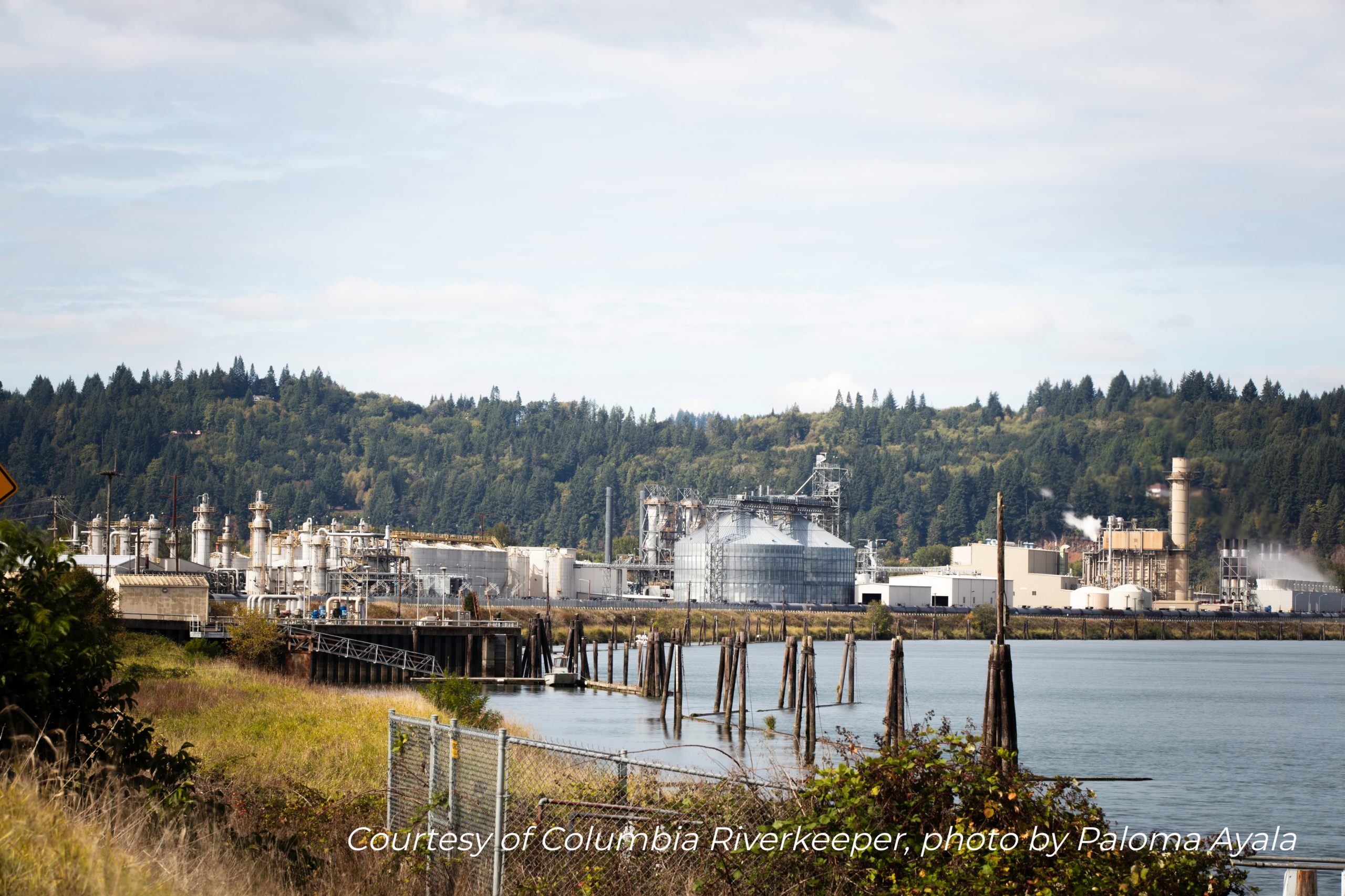
January 8, 2026 — In response to the lawsuit brought by Advocates for the West and our partners, the U.S. Army Corps of Engineers determined that NEXT Renewable Fuels, Inc.’s current proposal to construct a diesel refinery at Port Westward requires another major federal permit. Construction for NEXT’s proposed refinery and rail yard would involve driving heavy equipment along a levee that protects the Port Westward area from the Columbia River. Locals and farmers have long raised concerns about the proposed refinery’s impacts on the system of levees and dikes that prevent flooding and provide irrigation. Degradation of the levee would put farmland, homes, and energy infrastructure at risk of flooding.
Under the Rivers and Harbors Act, the Army Corps must protect levees from damage by reviewing and issuing permits for activities that use, occupy, or alter levee infrastructure. In an April 2022 letter to NEXT, the Army Corps illegally determined that a permit was not required for the refinery. The lawsuit forced the Army Corps to reconsider its position.
Unless NEXT substantially alters its proposal, the company will need to undergo a major federal permit process that triggers compliance with additional federal laws and requires coordination with Tribes and other agencies. NEXT also still needs two state stormwater permits and an Army Corps Clean Water Act Section 404 permit before it can begin refinery construction.
August 7, 2025 — Advocates for the West won a preliminary victory in this case. The Oregon district court denied the Army Corps of Engineers’ motion to dismiss our case challenging the agency’s determination that a Rivers and Harbors Act Section 14 permit was not required for NEXT Renewable Fuels’ proposed refinery and rail yard in the Columbia River Estuary. The Court’s decision allows this case to proceed.
In an April 2022 letter to NEXT, the Army Corps illegally determined that although the project will “utilize the levee as a haul road,” a permit is not required. “Defendants’ argument that NEXT could use the Road as a haul road even without the Corps’ Section 408 determination is not well-taken; using the Levee without permission from the Corps is a misdemeanor,” U.S. District Judge Adrienne Nelson wrote in her opinion.
June 10, 2025 — Advocates for the West presented oral argument opposing defendants’ motion to dismiss.
October 19, 2024 — Advocates for the West filed our response to defendants’ motion to dismiss.
May 30, 2024 — Advocates for the West filed suit against the U.S. Army Corps of Engineers for determining that a Rivers and Harbors Act Section 14 permit was not required for NEXT Renewable Fuels’ proposed refinery and rail yard at Port Westward near Clatskanie, Oregon.
Construction for NEXT’s proposed refinery and rail yard would involve driving heavy equipment along a road atop a levee that protects the Port Westward area from the Columbia River. Degradation of the levee would put farmland, homes, and energy infrastructure at risk of flooding.
Locals and farmers in the area have long raised concerns about the proposed refinery’s impacts on the system of levees. Even NEXT admits that further studies are necessary to determine how much weight the road and levee can safely withstand. In an April 2022 letter to NEXT, the Army Corps illegally determined that although the project will “utilize the levee as a haul road,” a permit is not required. Advocates for the West and our client-partners challenge this determination in the lawsuit. Under the Rivers and Harbors Act, the Army Corps is responsible for protecting levees from damage, by issuing permits for activities that use, occupy, or alter the infrastructure. Construction of NEXT’s proposed refinery at Port Westward “uses” the levee and therefore requires a permit.
