
February 4, 2026 — Advocates for the West filed our motion for summary judgment, challenging the U.S. Air Force’s July 2023 Record of Decision (ROD) and March 2023 Environmental Impact Statement (EIS) to expand and intensify its military trainings using F-15 fighter jets over 7.5 million acres in the Owyhee Canyonlands. Our brief argues that the Court should declare that the U.S. Air Force violated the National Environmental Policy Act and the Administrative Procedure Act by failing to take a “hard look” at the potential impacts of the Air Force’s decision, and failing to analyze a reasonable range of alternatives to the proposed action. To remedy these violations, we argue that the Court should vacate the Air Force’s EIS and ROD.
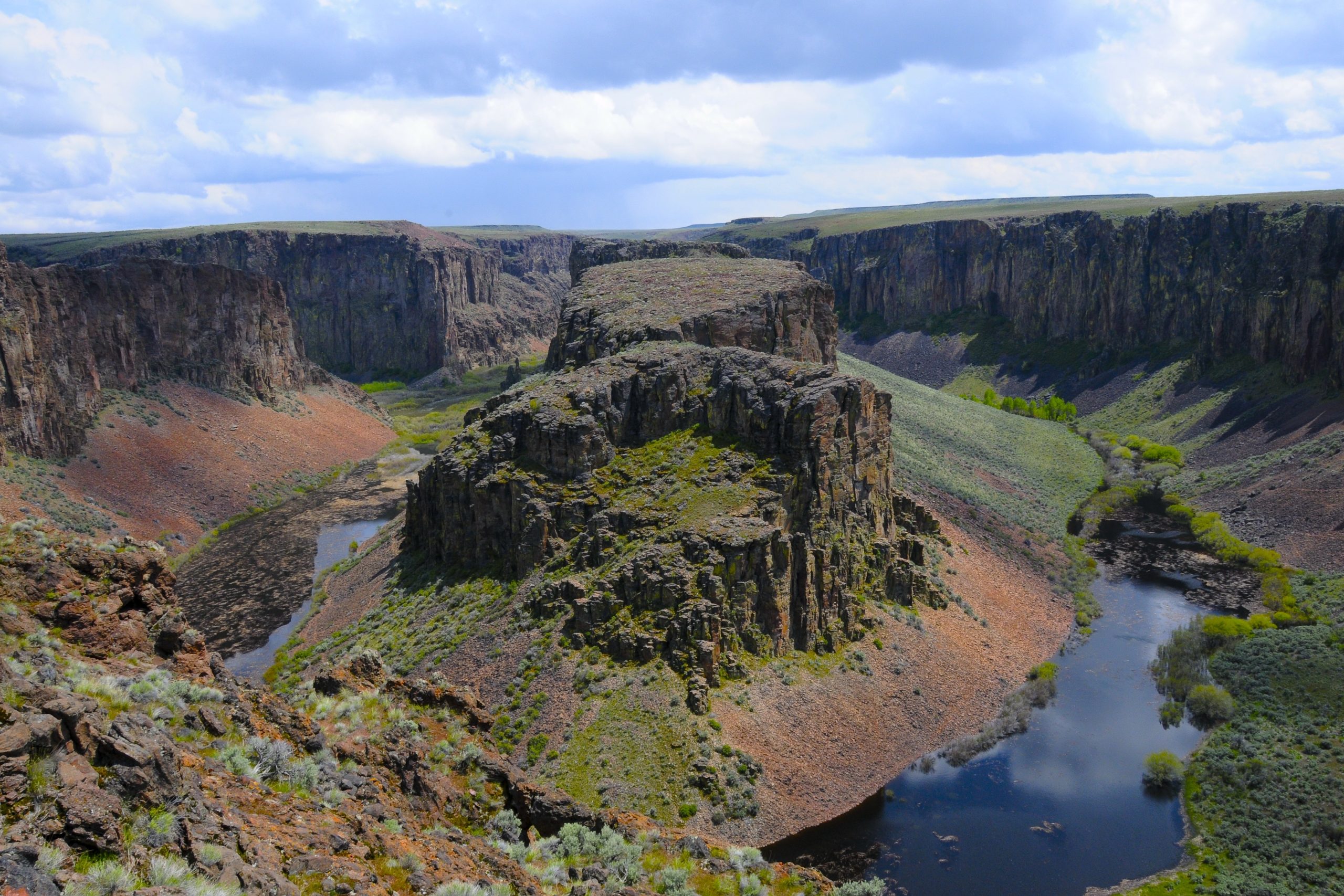
January 22, 2024 — Advocates for the West filed suit challenging the Air Force’s decision to expand and intensify its military trainings using F-15 fighter jets over Wilderness Areas and Wild and Scenic Rivers in the Owyhee Canyonlands of Idaho, Oregon, and Nevada, threatening key sage-grouse strongholds, as well as bighorn sheep and other wildlife.
The decision allows low-altitude supersonic and subsonic fighter training exercises across some 7.5 million acres of the Owyhee Canyonlands, lowering the “floor” for military jets to train as low as 100 feet above ground level for subsonic flights. The trainings would generating significant noise, visual intrusions, and pollution in largely pristine and quiet natural landscapes, and disturb sage-grouse other sensitive species.
As part of these military training exercises, the Air Force also plans to drop nearly 19,000 chaff bundles—comprised of millions of aluminum-coated glass fibers in canisters—and 18,000 flares annually, amounting to dozens each day. This will disperse debris and pollution across roughly 12,000 square miles, including into waterways, and pose a serious risk of wildfire.